
Yo Soy Un Hombre Sincero... (Verso I)
Yo soy un hombre sincero
De donde crece la palma,
Y antes de morirme quiero
Echar mis versos del alma.
Yo vengo de todas partes,
Y hacia todas partes voy:
Arte soy entre las artes,
En los montes, monte soy.
Yo sé los nombres extraños
De las yerbas y las flores,
Y de mortales engaños,
Y de sublimes dolores.
Yo he visto en la noche oscura
Llover sobre mi cabeza
Los rayos de lumbre pura
De la divina belleza.
Alas nacer vi en los hombros
De las mujeres hermosas:
Y salir de los escombros,
Volando las mariposas.
He visto vivir a un hombre
Con el puñal al costado,
Sin decir jamás el nombre
De aquella que lo ha matado.
Rápida, como un reflejo,
Dos veces vi el alma, dos:
Cuando murió el pobre viejo,
Cuando ella me dijo adiós.
Temblé una vez —en la reja,
A la entrada de la viña,—
Cuando la bárbara abeja
Picó en la frente a mi niña.
Gocé una vez, de tal suerte
Que gocé cual nunca:—cuando
La sentencia de mi muerte
Leyó el alcalde llorando.
Oigo un suspiro, a través
De las tierras y la mar,
Y no es un suspiro,—es
Que mi hijo va a despertar.
Si dicen que del joyero
Tome la joya mejor,
Tomo a un amigo sincero
Y pongo a un lado el amor.
Yo he visto al águila herida
Volar al azul sereno,
Y morir en su guarida
La vibora del veneno.
Yo sé bien que cuando el mundo
Cede, lívido, al descanso,
Sobre el silencio profundo
Murmura el arroyo manso.
Yo he puesto la mano osada,
De horror y júbilo yerta,
Sobre la estrella apagada
Que cayó frente a mi puerta.
Oculto en mi pecho bravo
La pena que me lo hiere:
El hijo de un pueblo esclavo
Vive por él, calla y muere.
Todo es hermoso y constante,
Todo es música y razón,
Y todo, como el diamante,
Antes que luz es carbón.
Yo sé que el necio se entierra
Con gran lujo y con gran llanto.
Y que no hay fruta en la tierra
Como la del camposanto.
Callo, y entiendo, y me quito
La pompa del rimador:
Cuelgo de un árbol marchito
Mi muceta de doctor.
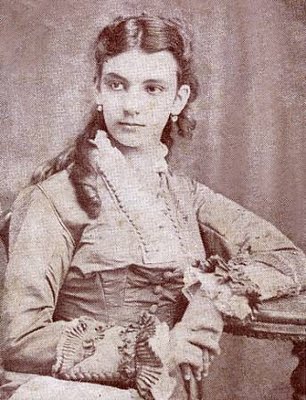
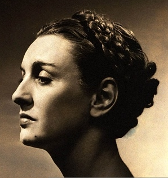 During the 1920s and early ’30s she contributed a number of stories and reviews to Theatre Arts, Creative Art, International Studio, and Harper's magazines. During World War II, Mannes was involved in government work.
 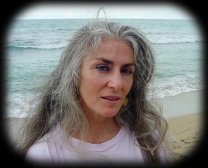 After the war she resumed writing for magazines, notably The New Yorker, was a feature editor for Glamour, contributed a monthly column to The New York Times and was a regular commentator on a New York public television station. A collection of essays criticizing and satirizing American mores, foibles, and preoccupations appeared in 1958 as More in Anger, a book that occasioned widespread comment. Mannes was one of the more well-known writers, editors and social critics of her time, and her words often took clear aim at the hypocrisy of life in the USA and the so-called “American Dream”.
 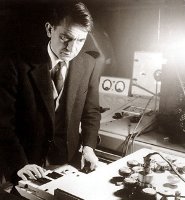 A “mashup”, or collection of disparate vocal elements, of contemporary American politicians, pundits, and scholars woven over a Latin American rhythmic musical bed. This composition was created in the spirit of 1942 French composer and theoretician who began his exploration of radiophony when he joined Jacques Copeau and his pupils in the foundation of the Studio d'Essai de la Radiodiffusion nationale. The studio originally functioned as a center for the Resistance movement in French radio, which in August 1944 was responsible for the first broadcasts in liberated Paris. It was here that Schaeffer began to experiment with creative radiophonic techniques using the sound technologies of the time.
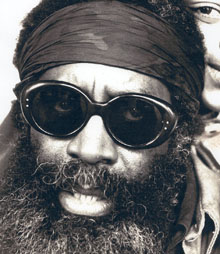 Dixon was one of the seminal figures in the free jazz movement. He played the trumpet, flugelhorn, and piano, often using electronic delay and reverberation as part of his trumpet playing. In the 1960s Dixon established himself as a major force in the jazz avant-garde movement. In 1964, Dixon organized and produced the 'October Revolution in Jazz', four days of music and discussions at the Cellar Café in Manhattan. The participants included notable musicians Cecil Taylor and Sun Ra among others. It was the first free-jazz festival of its kind. He was Professor of Music at Bennington College, Vermont, from 1968 to 1995, where he founded the college's Black Music Division. From 1970 to 1976 he played "in total isolation from the market places of this music", as he puts it. His studies in music came relatively late in life, at the Hartnette Conservatory of Music (1946–1951). He studied painting at Boston University and the WPA Arts School and the Art Students League. During the early 1950s he had a job at the United Nations, and founded the UN Jazz Society.
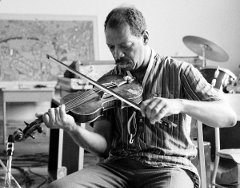 It consists of one long composition by Coleman taking up both sides of the album, played by the London Symphony Orchestra and conducted by David Measham. Coleman himself only plays on a few segments, and there is no other jazz instrumentation. Ornette was an American jazz saxophonist, violinist, trumpeter and composer. He was one of the major innovators of the free jazz movement of the 1960s, a term he invented with the name of an album. He was awarded a MacArthur Fellowship in 1994. His album Sound Grammar received the 2007 Pulitzer Prize for music. ‘I had a very interesting father,’ his son, the drummer Denardo Coleman, said, ‘It’s not that he thought outside the box. He just didn’t think there were any boxes.’ In his indifference to convention he resembled his friend John Cage, who hated jazz but loved Coleman.
  His deep, resonant voice has also been featured in many commercial advertisements and movie trailers.
 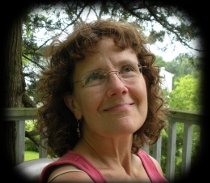 During the 1940s, he was heard on The World's Great Novels and other radio programs broadcast from Chicago. He attracted wider attention when he recorded the aural vignettes on Word Jazz (Dot, 1957), Love Words, and Son of Word Jazz (Dot, 1958). Nordine began performing and recording such albums at the peak of the beat era and was associated with the poetry-and-jazz movement. However, it has said that some of Nordine's writings "are more akin to Franz Kafka or Edgar Allan Poe" than to the beats. Many of his word jazz tracks range in features from, critiques of societal norms to lightweight and humorous, while others reveal dark, paranoid undercurrents and bizarre, dream-like scenarios.
  After more than a decade of activity and performance, notably as a leading bassist in free jazz, Grimes completely disappeared from the music scene by 1970. Grimes was often presumed dead, but he was rediscovered in 2002 and returned to performing. He took up the violin at the age of 12, then began playing tuba, English horn, percussion, and finally the double bass in high school. He furthered his musical studies at Juilliard and established a reputation as a versatile bassist by the mid-1950s. He recorded or performed with saxophonists Gerry Mulligan, Sonny Rollins, pianist Thelonious Monk, singer Anita O'Day, clarinetist Benny Goodman and many others.
 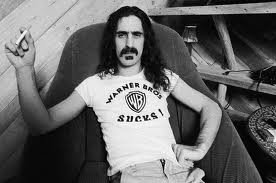 "I'm the Slime" is a 1973 single by Frank Zappa and The Mothers from the album Over-Nite Sensation. An ode to American television media, different live versions can be found on Zappa in New York and You Can't Do That on Stage Anymore, Vol.1, which version was performed on the same night as the majority of Roxy and Elsewhere. "I'm the Slime", and its b-side version of Montana, were put on Zappa's best of Strictly Commercial. It was performed in concert from 1973 to 1977 and 1984.
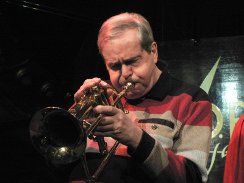 Tribute to Gnu High, an LP by Canadian Kenny Wheeler featuring Keith Jarrett, Dave Holland and Jack DeJohnette recorded in 1975 and released on the ECM label in 1976. Kenneth Vincent John Wheeler, OC (January 1930 - September 18, 2014) was a Canadian composer and trumpet and flugelhorn player, based in the U.K. from the 1950s onwards. Most of his performances were rooted in jazz, but he was also active in free improvisation and occasionally contributed to rock music recordings. Wheeler wrote over one hundred compositions and was a skilled arranger for small groups and larger ensembles.